
Introduction: The Hidden Career Path In Aerospace
When most people think about careers in aerospace, they usually imagine aircraft design, aerodynamics, or propulsion engineering.
However, one of the most critical yet often overlooked career paths in the aviation industry is technical publication.
Behind every certified aircraft, there are thousands of pages of structured documentation that guide engineers, technicians, airlines, and regulators. These documents ensure that aircraft systems are understood, maintained, and operated safely.
This is where aerospace technical publication skills become extremely valuable.
For professionals looking to build careers in MRO (Maintenance, Repair, and Overhaul) organizations or OEM (Original Equipment Manufacturer) companies, expertise in technical documentation can open doors to stable and highly specialized roles within the aviation ecosystem.
GLOINNT Solutions Private Limited supports aerospace documentation frameworks that help organizations maintain compliance, safety, and operational efficiency across the aircraft lifecycle.
Understanding this field can help professionals identify opportunities that many people overlook in the aerospace industry.
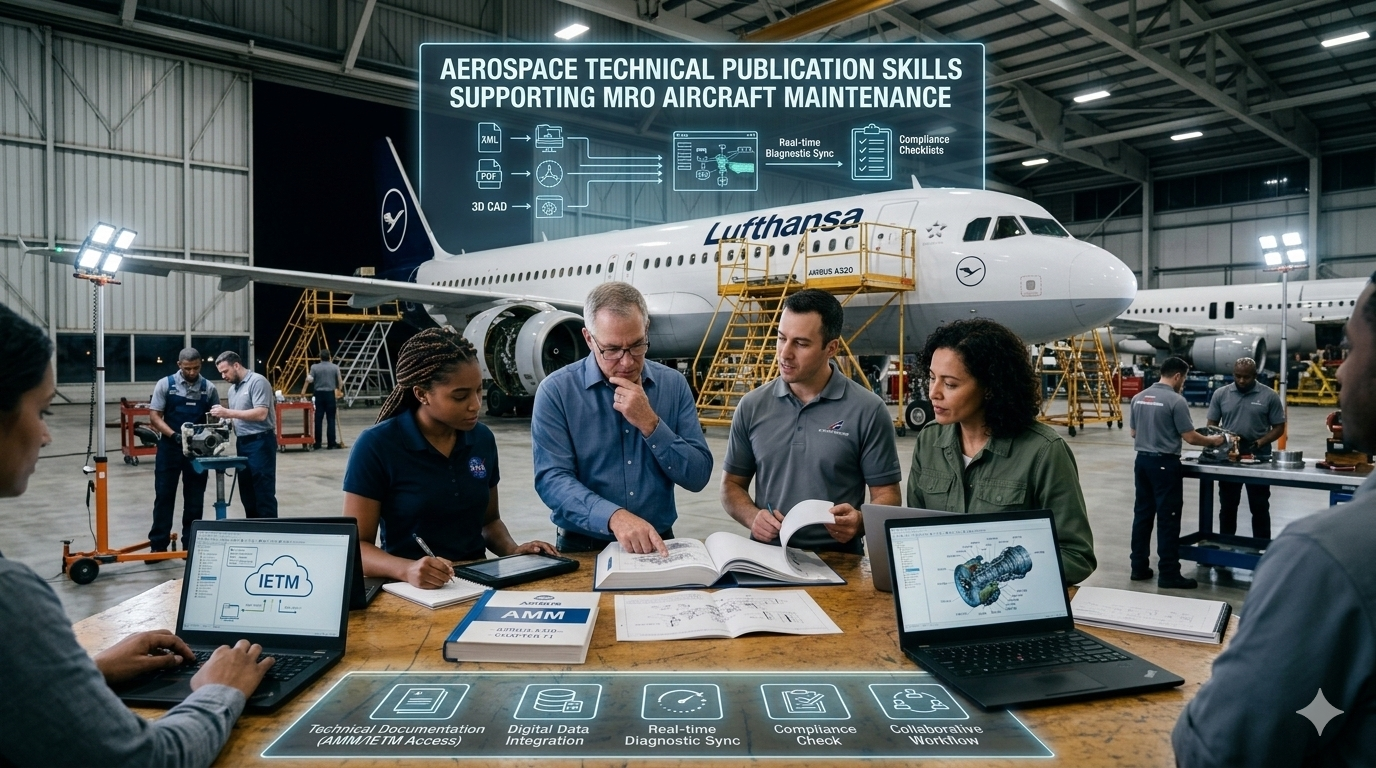
What Are Aerospace Technical Publication Skills?
Aerospace technical publication involves the creation of structured documentation used for aircraft operation, maintenance, and certification.
These documents translate complex engineering information into clear, standardized procedures that technicians and engineers can follow.
Some of the most important aviation documents include:
Aircraft Maintenance Manual (AMM)
Illustrated Parts Catalog (IPC)
Component Maintenance Manual (CMM)
Structural Repair Manual (SRM)
Fault Isolation Manual (FIM)
Professionals working in this field combine engineering understanding with documentation standards to produce manuals that meet strict aviation regulations.
Key skills involved in technical publication include:
Engineering System Understanding
Structured Documentation Development
Regulatory Compliance Knowledge
Digital Documentation Tools
These skills ensure that aircraft maintenance procedures remain clear, accurate, and compliant with global aviation standards.
Why Aerospace Technical Publication Skills Are In High Demand
The aviation industry depends heavily on structured documentation to maintain aircraft safety and compliance.
Several factors are increasing the demand for technical publication professionals.
Growing Global Aircraft Fleets
Air travel demand continues to increase worldwide, which means more aircraft are entering service.
This growth creates the need for professionals who can develop and maintain technical documentation that supports aircraft operations.
Strict Aviation Regulatory Standards
Aviation authorities such as Federal Aviation Administration (FAA) and European Union Aviation Safety Agency (EASA) require precise documentation to maintain airworthiness certification.
Without properly structured manuals, aircraft operations cannot meet regulatory requirements.
Digital Transformation In Aerospace Documentation
Modern aviation documentation is increasingly moving toward digital frameworks such as S1000D standards.
This shift requires professionals who understand structured data modules and digital documentation environments.
Career Opportunities In MRO And OEM Organizations
Developing aerospace technical publication skills can open career opportunities across several segments of the aviation industry.
Opportunities In MRO Organizations
Maintenance, Repair, and Overhaul organizations are responsible for maintaining aircraft fleets for airlines.
Technical publication professionals in MRO environments contribute to:
Maintenance Procedure Development
Troubleshooting Documentation
Revision And Update Management
Regulatory Compliance Documentation
These roles are critical to maintaining aircraft reliability and safety.
Opportunities In OEM Companies
Original Equipment Manufacturers design and develop aircraft systems and components.
Technical publication specialists in OEM organizations support engineering teams by developing foundational documentation for aircraft programs.
Responsibilities may include:
Aircraft System Manual Development
ATA Chapter Structuring
Certification Documentation Preparation
Engineering Data Interpretation
These roles require both technical knowledge and documentation precision.
Why Choose GLOINNT Solutions Private Limited
GLOINNT Solutions Private Limited works with aerospace documentation frameworks that support aviation engineering, maintenance operations, and regulatory compliance.
The organization focuses on delivering structured technical documentation solutions aligned with industry standards.
Industry Knowledge
Work aligned with recognized aviation documentation structures and compliance expectations.
Structured Documentation Expertise
Development of technical manuals that support aircraft maintenance and engineering operations.
Aviation Compliance Support
Documentation frameworks that align with aviation regulatory requirements.
Our Service Areas
GLOINNT Solutions Private Limited supports aerospace organizations through specialized technical documentation services.
Aircraft Technical Documentation
Development of structured manuals used for aircraft operation and maintenance.
S1000D Documentation Support
Creation of digital documentation modules aligned with modern aerospace standards.
Regulatory Documentation Support
Ensuring documentation frameworks align with global aviation authority expectations.
Documentation Lifecycle Management
Managing updates and revisions to maintain documentation accuracy throughout the aircraft lifecycle.
How We Work
The approach followed by GLOINNT Solutions Private Limited focuses on structured processes that ensure accuracy and compliance.
Step 1: Understanding Requirements
Evaluating documentation needs based on aerospace program requirements.
Step 2: Documentation Development
Creating structured technical manuals aligned with aviation documentation standards.
Step 3: Quality And Compliance Review
Ensuring every document meets accuracy, clarity, and regulatory expectations.
Step 4: Ongoing Documentation Support
Providing continued support for updates and lifecycle documentation management.
Frequently Asked Questions
What Are Aerospace Technical Publication Skills?
These skills involve creating structured aviation documentation that supports aircraft maintenance, operations, and certification.
Are Technical Publication Roles Important In Aerospace?
Yes. Technical documentation ensures engineers and technicians follow correct maintenance and operational procedures.
Can Technical Publication Skills Lead To Aerospace Careers?
Yes. These skills are used across MRO organizations, OEM manufacturers, and aviation engineering environments.
What Documentation Standards Are Used In Aviation?
Common frameworks include ATA documentation structures and digital documentation standards such as S1000D.
Conclusion
Aerospace careers are often associated with engineering design and aircraft systems.
However, technical publication plays an equally important role in ensuring aircraft safety, maintenance accuracy, and regulatory compliance.
Professionals who develop aerospace technical publication skills gain access to specialized opportunities within both MRO organizations and OEM manufacturers.
As aviation technology evolves and aircraft fleets expand, the importance of structured documentation will continue to grow.
GLOINNT Solutions Private Limited supports aerospace documentation frameworks that help ensure aircraft systems remain safe, compliant, and operational throughout their lifecycle.
If you want to learn more about aerospace documentation frameworks and industry practices, connect with GLOINNT Solutions Private Limited.