
Technical Publication in Aerospace Industry Is Becoming the Smartest Career Entry for Aerospace Graduates
Technical Publication in Aerospace Industry is no longer just a documentation role — it has become one of the most practical and powerful entry points into core aerospace jobs. For many Aerospace, Aeronautical, and AME graduates, breaking into the aviation sector feels overwhelming. Core design roles demand experience. Maintenance roles require licensing. And campus placements often don’t align with real industry requirements.
But here’s what most colleges don’t explain clearly: aircraft manufacturers, MRO organizations, and global aviation companies rely heavily on structured technical documentation. Every aircraft that flies operates using manuals, compliance documents, maintenance instructions, illustrated parts catalogs, and regulatory publications. Behind all of this is a specialized team trained in Technical Publication in Aerospace Industry.
At GLOINNT, we help aerospace graduates understand how this pathway works — and more importantly, how to use it as a stepping stone into long-term core aviation careers.
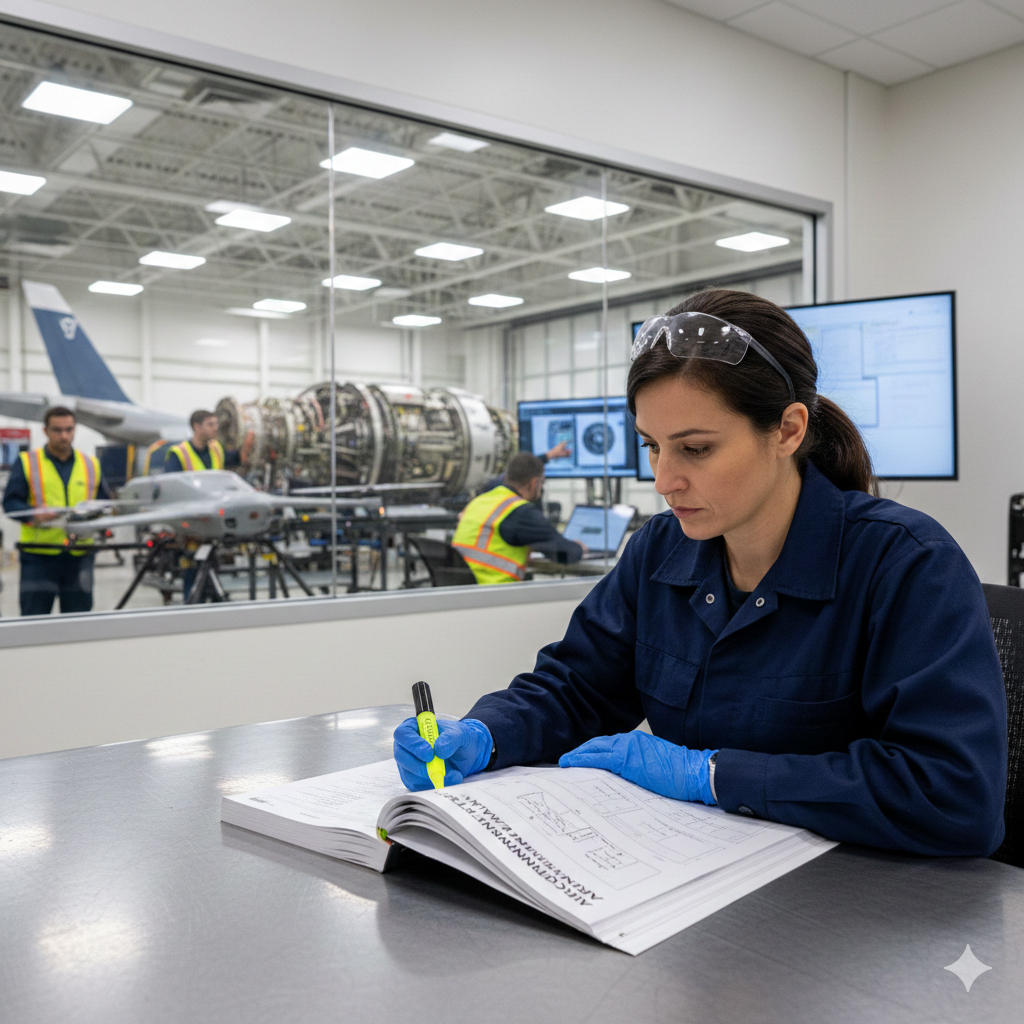
Why Technical Publication in Aerospace Industry Is a Strategic Career Move
Most students assume technical publication is “just writing.” That’s a misconception.
In reality, Technical Publication in Aerospace Industry requires:
Understanding aircraft systems
Reading engineering drawings
Interpreting maintenance procedures
Working with ATA standards
Following aviation regulatory frameworks (FAA, EASA, DGCA)
Collaborating with design and quality teams
When you work in this domain, you are directly connected to core aerospace operations. You gain exposure to real aircraft systems, structured documentation standards, and compliance procedures — all of which are fundamental to core aerospace roles.
Career Advantages:
✔ Faster industry entry compared to design roles
✔ Exposure to real aircraft technical data
✔ Strong global demand
✔ Opportunity to transition into QA, engineering support, or design documentation roles
✔ Stable career growth in MRO & OEM companies
For 2024–2026 aerospace graduates, this is a realistic and high-growth pathway.
Why Choose Us – Why GLOINNT Makes the Difference
At GLOINNT, we don’t just provide training — we prepare students for real aerospace work environments.
Our Technical Publication in Aerospace Industry training program is built around industry workflow, not classroom theory. We understand the gap between engineering education and aerospace job expectations. That’s where we step in.
What Makes GLOINNT Different?
Industry-aligned curriculum
Real documentation project exposure
Training by experienced aerospace professionals
Structured authoring & ATA documentation modules
Interview & placement support
Career mentorship guidance
You can explore our industry background here: Internal Link – https://gloinnt.com/
We focus on building confidence, clarity, and practical skill — because aerospace companies don’t hire degrees; they hire capability.
Our Service Areas
We support students and professionals across different aerospace backgrounds.
Fresh Aerospace & Aeronautical Graduates
Students who want to enter the aerospace industry quickly without waiting years for design openings.
AME Students
Aircraft Maintenance Engineering graduates looking for technical aviation roles beyond line maintenance.
Mechanical & Engineering Graduates
Professionals wanting to transition into aerospace documentation and aviation roles.
International Job Aspirants
Students targeting global aerospace documentation careers in MRO and OEM environments.
Our goal is simple: make Technical Publication in Aerospace Industry a structured and guided entry path, not a confusing decision.
How We Work: GLOINNT Training Approach
Step 1: Career Assessment & Consultation
We begin with understanding your background, strengths, and career goals.
Step 2: Technical Foundation Building
Students learn:
Aircraft documentation structure
ATA chapter system
Maintenance manual interpretation
Engineering drawing reading
Regulatory documentation basics
Step 3: Practical Documentation Exposure
We simulate real industry documentation workflows used in aerospace companies.
Step 4: Placement & Interview Support
Resume structuring, mock interviews, and guidance for aerospace documentation roles.
Ready to take the first step?
👉 Internal Link – https://gloinnt.com/careers/
Real Student Stories
Rohan S. – BE Aerospace (2024 Graduate)
“I was applying for design jobs for six months with no results. After joining GLOINNT’s Technical Publication in Aerospace Industry training, I understood how documentation connects to aircraft systems. Within three months, I secured a junior technical author role in an MRO company.”
Priya M. – AME Graduate
“I always wanted to work in aviation but didn’t want to stay limited to line maintenance. GLOINNT showed me how Technical Publication in Aerospace Industry could be a smart entry into core aerospace teams. Today, I work in a documentation support role with real exposure to aircraft manuals.”
These journeys are not shortcuts — they are structured transitions.
Career Growth After Technical Publication in Aerospace Industry
Many professionals start as:
Technical Author
Documentation Engineer
Technical Publication Executive
Maintenance Manual Developer
With experience, career progression includes:
Senior Technical Author
Documentation Lead
Quality & Compliance Specialist
Engineering Support Analyst
Program Documentation Manager
The exposure gained through Technical Publication in Aerospace Industry builds deep understanding of aircraft documentation standards — which becomes a strong foundation for advanced aerospace roles.
Industry Demand & Global Scope
The aerospace industry depends on documentation accuracy for aircraft safety and compliance. Every modification, inspection, or system update must be recorded in standardized formats.
Global regulatory bodies like:
FAA – https://www.faa.gov
EASA – https://www.easa.europa.eu
mandate strict documentation protocols. This creates consistent demand for trained professionals in Technical Publication in Aerospace Industry.
With aircraft production increasing and MRO activities expanding globally, documentation roles are growing steadily.
FAQ – Technical Publication in Aerospace Industry
Is Technical Publication a core aerospace role?
Yes. It directly supports aircraft operations, maintenance, and regulatory compliance.
Do I need coding knowledge?
No. Structured documentation understanding is more important than coding.
Can I transition into other aerospace roles later?
Yes. Many professionals move into QA, engineering support, or documentation leadership roles.
How long does it take to become industry-ready?
With focused training, most students build strong entry-level readiness within a few months.
Is This Career Path Right for You?
If you are:
An Aerospace or Aeronautical graduate (2024–2026 batch)
An AME student exploring alternative aviation roles
An engineering graduate seeking stable entry into aerospace
Then Technical Publication in Aerospace Industry could be your most practical entry into core aviation jobs.
Ready To Begin?
At GLOINNT, we believe aerospace careers should be structured, guided, and achievable — not confusing or uncertain.
📅 Book a Free Virtual Consultationhttps://gloinnt.com/contact-us/
Let’s build your aerospace career with clarity, confidence, and the right direction.